
10 Important Social Media Marketing Platforms
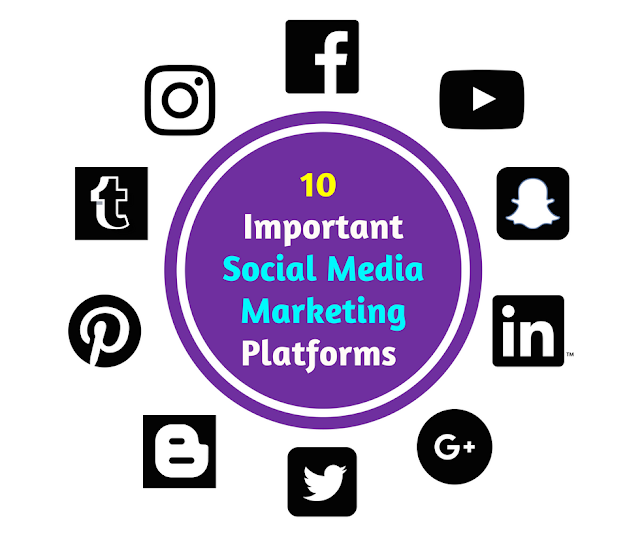
Social Media has undeniably become a crucial part of marketing efforts. A company's social media pages can sometimes rank higher in searches than its website, and profiles can improve SEO and rankings. Organizations, whether Business-to-Business, Business-to-Consumer, or Non-Profit, can all benefit from a strong online brand presence. Being present on social media platforms alone is not enough. You also need a strategy that aligns with your other marketing directives and initiatives, and you need to use the platforms that best support and represent your brand. You also need to build and manage communities that benefit your company, consumers, and industry partners.
Companies can use numerous social media platforms and systems. In this post, we will look at ten platforms and their unique strengths: Blogger, Facebook, Google+, Instagram, LinkedIn, Pinterest, Snapchat, Tumblr, Twitter, and YouTube. Some companies may find that only one or two of these platforms serve their mission, brand, and goals well, while others may need a combination.
Blogger
Blogger (or the blogging platform of your choice) can be an essential part of your marketing strategy. Blogging helps increase brand awareness and search rankings by strengthening your SEO. Strong SEO rankings are closely tied to the amount of valuable, on-topic content you have tied to your website and brand. Blogger is free and easy to use, which makes it an excellent starting platform for novice and experienced marketers. Other blogging platforms include WordPress, Tumblr, and Medium.
Facebook can be a great marketing platform for companies, organizations, and individuals looking to build and nurture relationships and communities with new and existing customers. The platform lets you give followers early access to new products and gather input on customers’ wants and needs. You can also track and gauge sentiment about your brand and act quickly when needed. The platform has over 1.7 billion users globally, and the user base skews slightly female. Peak traffic on Facebook is typically mid-week, between 1-3 p.m. Posting regularly and communicating with followers is essential.
Instagram is a mobile photo- and video-sharing platform. The platform has over 500 million users and is quickly growing. Instagram gives companies, celebrities, and public figures a platform to share behind-the-scenes content or company culture that followers otherwise wouldn't see. It humanizes businesses and can make people more endearing. Instagram can also be a great place to collect data on niche cultures and groups that may not appear on other platforms through hashtags and other keywords.
Google+ has over 300 million users, typically tied to a Gmail, Chrome, or YouTube account. While many argue that the platform isn't the strongest social media marketing platform, it still offers significant benefits. Because Google+ is a Google platform, it can help increase your visibility and search rankings. If you are a local company, it is highly beneficial to have a Google+ business page and list your physical address. When people search for your company, an address card with a link to your website will pop up, making it easier for local customers to find you. Read more about Google My Business (formerly Google Local) here.
LinkedIn is the world's leading professional social network with over 450 million users. It is an excellent way to connect with companies you currently partner with for cross-promotion or to scout new potential partners. It can also be a great place to see what your competition is doing that works or doesn't, so you can learn from them. You can also give more detailed information about your company and employees, and feature products and services. One of LinkedIn's most powerful features is connecting with new talent for your workforce. Potential applicants can learn more about the company culture and open positions, and you can scout people you think would be a good organizational fit.
Pinterest has over 100 million active users, the majority of whom are women. Users create pinboards with their favorite products, designs, and styles to share with others and get inspiration. People can usually discover new content and products by browsing other boards created by other users and companies. It can be an excellent way to do research and gauge consumer interest. Popular topics on the platform include fashion, beauty, interior design, weddings, art, travel, and photography. Pinterest works best for companies with products or D-I-Y services.
Snapchat
Snapchat is a video and photo app that lets you send messages that last up to 10 seconds. It has over 200 million users, mostly teens, but also a large group aged 18 to 39. Snapchat has quickly become a great place to advertise to a younger demographic in a fun way. You can create Geofilters, which let you share your location with a fun overlay on your photos or videos. Companies use these filters to promote new product launches, build brand awareness, or even promote new movies. This platform can also help companies, celebrities, and solo entrepreneurs connect with customers or show what happens behind the scenes.
Tumblr
Tumblr combines blogging with a social sharing platform. It has about 555 million users, most of whom are between 13 and 19 years old. It is a creative platform that can nurture brand loyalty from a young age. Companies can use this platform to gather consumer data, promote new products and services, and recruit new talent. Popular topics or tags on Tumblr include beauty, music, TV shows, video games, and movies.
Twitter is a microblogging platform where you send out short, 140-character messages to your followers and others on the platform. It has 313 million active users, mostly Millennials and young professionals. Twitter can be a good way to create two-way connections with customers, partners, and vendors. The platform can be a great way for businesses t learn about the sentiments about their products as well as habits that may inform on product needs and uses. The platform can profoundly impact a company's sales and marketing, product development, customer service, and talent acquisition.
YouTube
With over 1 billion active users, YouTube can be a valuable marketing tool for many kinds of companies. The platform is the world's second-largest search engine, so it is important to publish content to ensure your voice is part of the conversation about your products and services. According to Nielsen, YouTube reaches more people in the 18-34-year-old category than any cable network. The platform can help a product or service campaign show new launches in use and is an excellent way to interact with customers and get feedback.
This is not a complete list of the platforms a company can use for social media marketing. Depending on where you do business and your needs, platforms such as Skype, WeChat, and QZone could fit your strategy better. Be sure to research the part of the world you do business in and which platforms they use.
In the coming weeks, I'll take a deeper dive into each of these platforms to discuss the features that can benefit a marketing strategy. Which platforms do you use for your business and why? Please share in the comments below.
Thanks for reading!
The data in this post comes from Statista, Hootsuite, and the SO ME Academy.
