
Measurement! What Is It Good For?
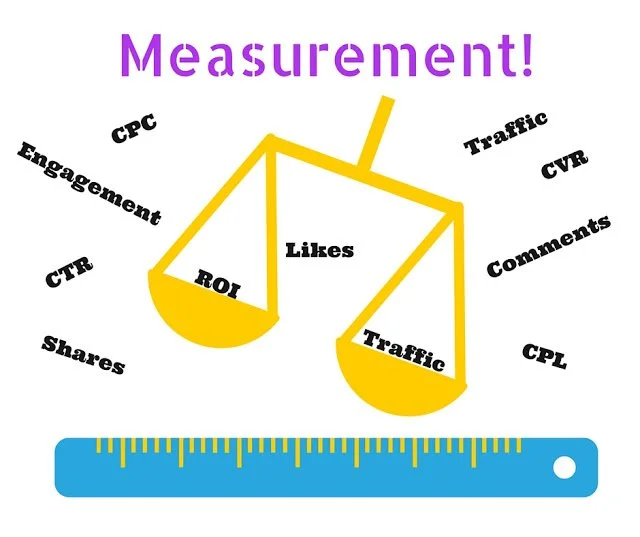
“Measurement is like laundry. It piles up the longer you wait to do it.”
- Amber Naslund, SVP of Marketing, Sysomos
Most things in life have inputs and outputs. You do your homework; you get a grade or, at least, the self-gratification of a job well done. You put vegetables and fruit in a blender; you get a smoothie. You give your customers 'great' content and, hopefully, get engagement and conversion in return.
As digital marketers, when we release this 'great' content into the ether, how do we know if it was well received or has accomplished the goals we set? That is when data collection, listening, and measurement come into play. In business, it is important to plan how we will measure the outputs of our actions, how often, and to set goals for success and failure, with room for improvement. Amber Naslund, SVP of Marketing at Sysomos explains it best when she says, “Measurement is like laundry. It piles up the longer you wait to do it”, expressing the need to routinely check the results of campaigns and marketing efforts.
What is Measurement?
Measurement in digital marketing evaluates the effectiveness of campaigns, online communities, and other tactics against business goals and objectives. It is essential to know your starting points (baselines), what you want to achieve (targets), which competitors you want to match or surpass, and your history (benchmarks). Measurement is essential for assessing the return on investment (ROI) of your marketing efforts.
Types of Measurement
Hootsuite categorizes two types of measurement and defines them as:
Quantitative, which focuses on numerical values and their growth and decline over time. Examples include follower growth, click-through rate (CTR), and conversion rate (CVR)
Qualitative, a more nuanced approach to collecting insights, best done on a post-by-post basis. Examples include positive and negative sentiments and comments on new product launches.
When setting measurement goals, we typically look at key performance indicators (KPIs) like conversions, engagement rates, bounce rates, and sentiment.
Measurement Tools
While many tools can help you measure digital marketing performance, here are a few to get you started.
Google Analytics is an excellent tool for tracking referral traffic, that is, which channels people are using to find and interact with your business.
Sysomos helps you gather insights, monitor, and analyze social media data for decision-making.
Hootsuite helps you measure and manage the performance of your social media networks.
Social Mention lets you search for your company or keywords and gather real-time data on mentions, sentiment, hashtags, and more from social media, blogs, microblogs, bookmarks, images, videos, and questions.
Marketing Grader by HubSpot uses various metrics to assess the strength of your inbound marketing initiatives through social media posts, conversions, and blog post frequency.
Social Media Platforms like Facebook and Twitter have analytics and insights pages that help you track the effectiveness of your posts and ads.
As you can imagine, measurement is one of the biggest and most important topics in digital marketing, and it could have its own blog dedicated to it (and there are many). I will revisit this issue, take a deeper dive into each type of measurement, and review different tools. Until then, click here for more on the topic from one of the best minds in the business, Avinash Kaushik.
What tools do you use for measurement? Comment below!
Thanks for reading!
